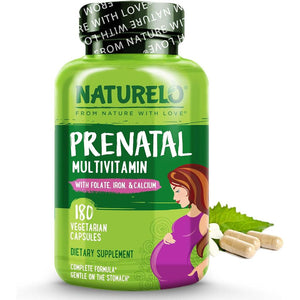
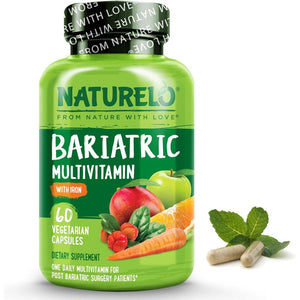
Pregnancy
 New mum
 Bariatric
 Active
 Gut health
 Plant-based
 Over 50


Ingredients explained
What is magnesium stearate? Fillers and binders explained
The short answer
Magnesium stearate is a small amount of a fatty substance used to stop supplement ingredients sticking to machinery, so the capsules fill evenly and each one holds the right dose. It is well studied, and at the tiny amounts used it is considered safe by the regulators who assess it. Fillers and bulking agents do a similar job: they add the bulk a capsule needs when the active ingredients alone would barely cover the bottom of it.
- Magnesium stearate is a flow agent, used in milligram amounts, not an active ingredient.
- It is a permitted excipient and has a long safety record at the amounts used.
- "Fillers" and "bulking agents" are the substances that give a tablet or capsule its size and consistency.
- Everything in a capsule has to be declared on the label, so you can always check.

What is magnesium stearate?
Magnesium stearate is the magnesium salt of stearic acid, a fatty acid found in plenty of everyday foods. In a supplement it works as a lubricant. Powders are sticky and abrasive, and without something to help them flow they clump and jam the machines, so the dose ends up unevenly divided between capsules. A pinch of magnesium stearate keeps the powder moving so each capsule holds the dose the label promises.
It is easy to confuse magnesium stearate with the magnesium you take as a supplement. Magnesium stearate is not the same as the magnesium you take as a supplement. The amount of actual magnesium it contributes is tiny and beside the point. Its job in the capsule is mechanical.
Why do supplements contain fillers and binders?
Look at a capsule of something potent, like vitamin B12, and the active ingredient might weigh a fraction of a milligram. A capsule holding only a fraction of a milligram cannot be dosed accurately, and no one would buy it near-empty. Fillers and bulking agents make up the difference. Common ones are plant cellulose, rice flour or rice concentrate, and similar food-grade powders. Binders help a tablet hold together; flow agents like magnesium stearate help the powder move. None of them is there to pad the product out cynically. They are what turns a few milligrams of active ingredient into a capsule you can take.

Are they safe? What the evidence says
This is where the internet tends to split into scare stories and shrugs, and neither is quite right. Magnesium stearate has been reviewed by food-safety bodies and is permitted as an additive, and the doses in a supplement are a fraction of the amounts studied. The claim you sometimes read, that it 'coats the gut' or blocks absorption, does not hold up at the amounts used in a capsule. If you have a specific sensitivity to an excipient, take it seriously and read labels for it. For most people, the flow agent in a capsule is not the thing to worry about.
How to read a supplement label
Reading a whole label is a more useful skill than fixating on any single ingredient. A few habits:
- Find the "active ingredients" and their amounts first. That is what you are paying for.
- The "other ingredients" line lists the excipients: the fillers, binders, the capsule shell and any flow agent.
- If you would rather keep those to a minimum, look for a short "other ingredients" list and a plant-based capsule.
- Amounts matter more than names. A long chemical name on the label is not a warning sign in itself.
How we think about our formulas
We keep our "other ingredients" lists short and use plant-based capsules, and we would rather use a food-form filler where we can. That is a formulation choice. We make no health claim from it, and we would never tell you a competitor's flow agent is doing you harm, because the evidence does not say that. If you want the simplest way to see how a formula is built, our whole-food range and the routine builder both show what is inside before you buy.
FAQ
Questions people ask
What is magnesium stearate made from?
It is the magnesium salt of stearic acid, a fatty acid that occurs in many foods. In supplements it is used in tiny amounts as a flow agent.
Is magnesium stearate bad for you?
At the amounts used in supplements it is considered safe by the bodies that assess food additives. The claim that it blocks absorption is not supported at those amounts.
What are bulking agents in vitamins?
Substances such as cellulose or rice flour that give a tablet or capsule its size, so a small amount of active ingredient can be dosed accurately.
Can I get supplements without fillers?
You can choose products with short "other ingredients" lists. Some bulk is often still needed to dose potent ingredients accurately, so "no other ingredients at all" is rare and not always a good sign.
Keep reading
Related guides
Read the guide →Vitamin D3: how much to take, and is 5000 IU too much?The NHS baseline, D3 versus D2, vegan D3 from lichen, and an honest look at the safe upper level and the 5000 IU question.
Read the guide →
Written by NATURELO Editorial Team
Edited by Milan Shah, Certificate in Plant-Based Nutrition