Pregnancy
 New mum
 Bariatric
 Active
 Gut health
 Plant-based
 Over 50


Over 50
Vitamins for women over 50: what matters and how to choose
The short answer
Food comes first, and the NHS vitamin D advice still applies after 50. The main multivitamin decision is often iron: the NHS gives women aged 50 and over a lower daily iron reference than women aged 19 to 49, while women who still have periods after 50 may need the higher amount. An iron-free formula may fit once periods have stopped, but it is not automatically right for everyone.
- Food comes first, plus the NHS advice to consider vitamin D in autumn and winter.
- Iron is the main decision: the NHS reference drops from 14.8 mg (19 to 49) to 8.7 mg (50 and over), though women still having periods may need the higher amount.
- Once periods have stopped and there is no other reason for iron, an iron-free 50+ formula can fit; if a GP has prescribed iron, follow that advice.
- Both 50+ formulas are iron-free: Daily Essentials is one capsule for simplicity, Complete is four for depth. Bones are supported mostly by food, exercise and vitamin D.

Start here
The guides in this section
Do women over 50 need a multivitamin?
For many, no. A varied, balanced diet still gives most people what they need, which is the NHS's position, and turning 50 is not on its own a reason to start one. Some do benefit from a supplement, though, and it helps to know when.
It can be sensible cover in a few situations. If you are eating less than you used to, or your appetite has softened, it is easier for the odd nutrient to fall short. If you eat little or no animal food, vitamin B12 is the one to make sure of, since plant foods are not a reliable source, and a multivitamin that includes it covers that. And if whole food groups are off the menu for a while, a daily one smooths over the gaps until things settle.
What matters after 50
Iron. This is where needs shift. The daily reference for women is 14.8 milligrams between 19 and 49, and 8.7 milligrams from 50 onwards, the same as for men, because many women stop losing iron through periods around this age.
Vitamin D. The NHS suggests 10 micrograms a day, and a supplement at that level through autumn and winter when there is little sunlight, with a ceiling of 100 micrograms. So look for one that covers that 10 microgram mark and stays well short of the 100, and if you already take a vitamin D drop, count it in so you do not double up. Our vitamin D guide has the full picture if you want it.
Calcium and bones. With bones, most of the work is done at the table and on your feet rather than in a capsule. The NHS puts calcium at 700 milligrams a day for adults, which a balanced diet usually covers, and points to weight-bearing exercise and enough vitamin D alongside it. Vitamin D and vitamin K contribute to the maintenance of normal bones, and our guide to bones after 50 goes into the rest.
Iron-free or with iron?
For most women over 50, this is the decision that matters, and it turns on whether you still have periods.
If your periods have stopped and you have no separate reason to take iron, an iron-free 50+ multivitamin can be a sensible fit. The NHS daily iron reference for women aged 50 and over is 8.7 mg, and most people should be able to get the iron they need from a varied and balanced diet.
If you are still having periods after 50, your iron needs may remain higher. In that case, compare our standard women's formulas, which contain iron, with the iron-free 50+ formulas. If you are unsure whether extra iron is appropriate for you, ask a GP or pharmacist.
If a GP has prescribed or recommended iron, follow that advice and do not rely on a multivitamin as a substitute for prescribed iron.
Our guide to iron for women goes further into when iron matters.
Women's or Women's 50+?
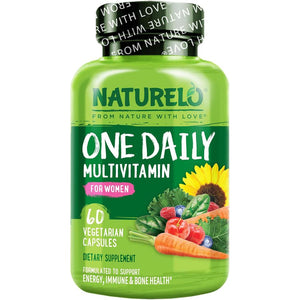
The practical difference between our standard women's range and the 50+ range is iron. The standard formulas in our women's multivitamins contain it, 9 milligrams in Daily Essentials and 14 in Complete, while both 50+ formulas leave it out. (If you are not yet 50, our guide to vitamins for women is the one to start with.)
Daily Essentials or Complete?
If a 50+ formula fits, it comes down to one capsule a day or four.
| Women's 50+ Daily Essentials | Women's 50+ Complete | |
|---|---|---|
| Capsules a day | 1 | 4 (2 at breakfast, 2 at dinner) |
| Iron | None | None |
| Vitamin D3 | 22 micrograms | 25 micrograms |
| Calcium | 60 mg | 200 mg |
| Magnesium | 60 mg | 310 mg |
| Extras | Fruit and vegetable blend | Fruit and veg blend, digestive enzymes and a live culture, glucosamine and MSM, botanicals including ginkgo |
| About per day | About 37p (120 capsules) | About £1.76 (120 capsules) |
The Women's 50+ Daily Essentials is the one to reach for if you want a single capsule and the basics covered. The Women's 50+ Complete is for a broader formula if you are happy taking four capsules a day. Both are vegan and iron-free.
Staying safe
- Add up your totals. If you take more than one supplement, read across them, especially for vitamin D and vitamin A, so nothing doubles up without you noticing.
- Vitamin A. If you have been through menopause, NHS advice is to keep total vitamin A from food and supplements below 1.5 mg a day. Count any other supplements that contain vitamin A.
- Warfarin. Both 50+ formulas contain vitamin K. If you take warfarin, check with a GP or pharmacist before changing your vitamin K intake.
- Botanicals. Women's 50+ Complete contains botanicals including ginkgo. If you take HRT or regular medicines, check with a GP or pharmacist before use.
- Medicines or a medical condition. If you take any medication or have a condition you are managing, a quick word with a GP or pharmacist first is worth it.
Choose yours
- Periods stopped, and you want one a day: Women's 50+ Daily Essentials.
- Periods stopped, and you are happy with four: Women's 50+ Complete.
- Still having periods: compare with our women's multivitamins, which contain iron.
- Unsure about iron: ask a GP or pharmacist before choosing.
FAQ
Questions people ask
What vitamins should a woman over 50 take?
For most, a varied diet still covers the essentials. The one the NHS asks everyone to consider is 10 micrograms of vitamin D a day in autumn and winter. A multivitamin on top is optional cover for gaps, not a replacement for food.
Should women over 50 take iron?
Not necessarily. The NHS daily iron reference for women drops from 14.8 mg at ages 19 to 49 to 8.7 mg from 50, as many women stop losing iron through periods. Women still having periods after 50 may need the higher amount. If a GP has prescribed iron, follow that advice, and ask a GP or pharmacist if you are unsure.
Why would I want a multivitamin without iron?
For women aged 50 and over, the NHS daily iron reference is 8.7 mg. If your periods have stopped and you have no separate reason to take iron, an iron-free multivitamin can be a sensible fit. If you are unsure whether extra iron is appropriate for you, ask a GP or pharmacist.
Can I keep taking my usual women's multivitamin after 50?
Yes. Our standard women's formulas contain iron (9 mg in Daily Essentials, 14 mg in Complete), which can suit you if you still have periods or have another reason for iron. If you no longer need the extra iron, an iron-free 50+ formula may fit instead.
What is the difference between Women's 50+ Daily Essentials and Complete?
Daily Essentials is one capsule a day; Complete is four. Both are iron-free and vegan. Complete carries more of several nutrients, such as calcium and magnesium, plus a fruit and vegetable blend, digestive enzymes and a live culture, glucosamine and MSM, and botanicals including ginkgo.
Do I need calcium as well?
The NHS sets calcium at 700 mg a day for adults, which a balanced diet usually covers, so food is the main source. Both 50+ formulas include some calcium (60 mg in Daily Essentials, 200 mg in Complete). Weight-bearing exercise and enough vitamin D also matter for bones.
Can I take it with HRT or other medicines?
Women's 50+ Complete contains botanicals including ginkgo, so if you take HRT or regular medicines, check with a GP or pharmacist before use. Both 50+ formulas contain vitamin K, so if you take warfarin, check before changing your vitamin K intake.
Keep reading
Related guides
Written by NATURELO Editorial Team
Edited by Milan Shah, Certificate in Plant-Based Nutrition
This guide is general information, not a substitute for advice from your GP, midwife or pharmacist.