Pregnancy
 New mum
 Bariatric
 Active
 Gut health
 Plant-based
 Over 50


Pregnancy
Pregnancy vitamins: what to take and when (a UK guide)
The short answer
In the UK there are two supplements the NHS asks everyone to take in pregnancy: folic acid and vitamin D. Take 400 micrograms of folic acid daily from before you conceive until you are 12 weeks pregnant, and 10 micrograms of vitamin D daily throughout. A pregnancy multivitamin can be a convenient way to cover those two plus a few other nutrients that matter, like iron, iodine and DHA. The one big thing to avoid is vitamin A as retinol, including cod liver oil. Always check with your midwife.
- The two the NHS asks for: 400 µg folic acid (to 12 weeks) and 10 µg vitamin D (throughout).
- A prenatal is a convenient way to cover more, not a replacement for those two.
- Avoid vitamin A as retinol, and cod liver oil.
- Free Healthy Start vitamins are available for some families.

Start here
The guides in this section
The two you should be taking (NHS)
Start here. The NHS recommends both of these for everyone in pregnancy.
Folic acid, 400 micrograms a day, from before conception until the end of week 12. Taken at that intake, from at least a month before conception through the first trimester, folic acid raises maternal folate status, and low maternal folate status is a risk factor in the development of neural tube defects, such as spina bifida, in the developing foetus. Those first weeks are often before you even know you are pregnant, so the advice is to start when you begin trying. If your pregnancy was not planned, start as soon as you know. Some women are advised to take a higher 5 milligram dose, on a GP's prescription, if they have certain risk factors. Your midwife will tell you if that applies to you.
Vitamin D, 10 micrograms a day, right through pregnancy and while breastfeeding. In the UK there is not enough sunlight for much of the year to rely on your skin, so a daily supplement is the sensible route.
What a prenatal adds, and whether you need one
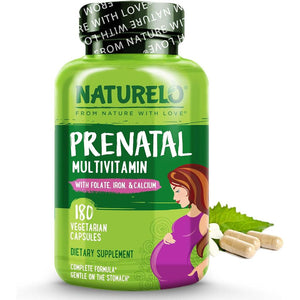
You do not have to take a pregnancy multivitamin. You can take folic acid and vitamin D on their own, and that covers the NHS recommendation. What a good prenatal adds is convenience and a few nutrients where a supplement can help in pregnancy: iron, iodine and the omega-3 DHA. It puts the two essentials and those extras in one capsule, at pregnancy-appropriate amounts. Our prenatal uses folate as methylfolate, an active form of folate, alongside iron, iodine, DHA and the rest. If you would rather follow the NHS advice to the letter with folic acid specifically, read the folate guide below, where the form and the amount both make a difference.
Nutrient by nutrient
- Folate. The essential one. 400 µg folic acid to 12 weeks. More on folic acid versus methylfolate in the folate guide.
- Iron. Needs rise in pregnancy, but iron is not recommended for everyone as standard, only if a blood test shows you are low. See the iron in pregnancy guide.
- Iodine. It contributes to normal cognitive function and to normal thyroid function, and it is easy to fall short of if you avoid dairy and fish. A declared, standardised amount is better than unmeasured raw kelp. See the iodine guide.
- Choline. Widely recognised as important in pregnancy, and easy to overlook, since the UK sets no formal figure. Food first, eggs especially. See the choline guide.
- Omega-3 DHA. Maternal intake of DHA contributes to the normal brain and eye development of the foetus and breastfed infants, at a daily intake of 200 mg DHA on top of the usual 250 mg of omega-3. If you do not eat oily fish, an algal DHA is the plant-based way to get it. See the omega-3 guide.

What to avoid
What you leave out counts here too.
- Vitamin A as retinol. Too much can harm the baby. Avoid supplements containing retinol, and avoid liver and cod liver oil. Beta carotene, the plant form, is fine, and is what a good prenatal uses.
- High-dose single supplements you have not discussed with your midwife.
- Herbal products, unless your midwife has said they are safe. Our prenatal is built to be pregnancy-appropriate, but any addition is worth a quick check.
When to start and how long
Ideally start folic acid and vitamin D before you conceive, and if not, as soon as you know. Folic acid runs to the end of week 12. Vitamin D continues throughout, and while you breastfeed. A prenatal is generally taken across pregnancy, and many women continue a postnatal version afterwards, which we cover in the new mum guide.
Your pregnancy routine
If you would like the two essentials plus the pregnancy-appropriate extras in one place, our pregnancy routine is built around the prenatal, and you can add an algal DHA if you do not eat oily fish. It only includes what applies to you.
FAQ
Questions people ask
What vitamins should I take in pregnancy?
Folic acid (400 µg to 12 weeks) and vitamin D (10 µg throughout) are the NHS recommendations. A prenatal can add iron, iodine and DHA conveniently.
Do I need a pregnancy multivitamin or just folic acid and vitamin D?
The two essentials cover the NHS advice. A prenatal is a convenient way to add other useful nutrients, not a requirement.
Which vitamins should I avoid in pregnancy?
Vitamin A as retinol, and cod liver oil. Check any herbal product with your midwife.
When should I start taking pregnancy vitamins?
Folic acid and vitamin D ideally before conception, or as soon as you know you are pregnant.
Keep reading
Related guides
The NATURELO nutrition team
Reviewed by Milan Shah, Certificate in Plant-Based Nutrition, T. Colin Campbell Center for Nutrition Studies (eCornell).
This guide is general information, not a substitute for advice from your GP, midwife or pharmacist.